
Read St. Joseph County Property Tax Records
St. Joseph County tracks more than 33,000 parcels, yet each individual assessment comes from a local assessor, not the county. Read the tax year and the source next to any value before you rely on it.
| Field | What It Shows | Where |
|---|---|---|
| Assessed value / SEV | Assessment and equalized value for the year | Local assessor and Equalization |
| Taxable value | Value to which rates apply | Assessment roll |
| PRE percentage | Principal Residence Exemption status | Local assessor |
| Current bill | Charges, payments, and balance | Local treasurer |
| Delinquent status | Overdue balance and foreclosure stage | County Treasurer |
Michigan equalization rests on 50 percent of true cash value. Taxable value tells a different story. Transfers, capped growth, losses, additions, and exemptions all move it away from that baseline. So a tax bill is never a substitute for a current sale value.
An assessment record carries more than the numbers. Look for property class, school district, acreage, land value, the PRE percentage, and the tax description. Compare every field within a single tax year, since mixing years invites error. A later sale date may sit beside an earlier value. That does not make the two figures mean the same thing.
Equalization and Local Assessors Split the Work
County Equalization studies sales and appraisals. It maintains the data and tax maps, and it applies class factors across St. Joseph County. The city or township assessor does the parcel-level work. That office sets each assessment, corrects the roll, tracks building characteristics, takes PRE filings, and fields Board of Review questions. The county's own explanation lays out the 50 percent true-cash-value framework behind it all.
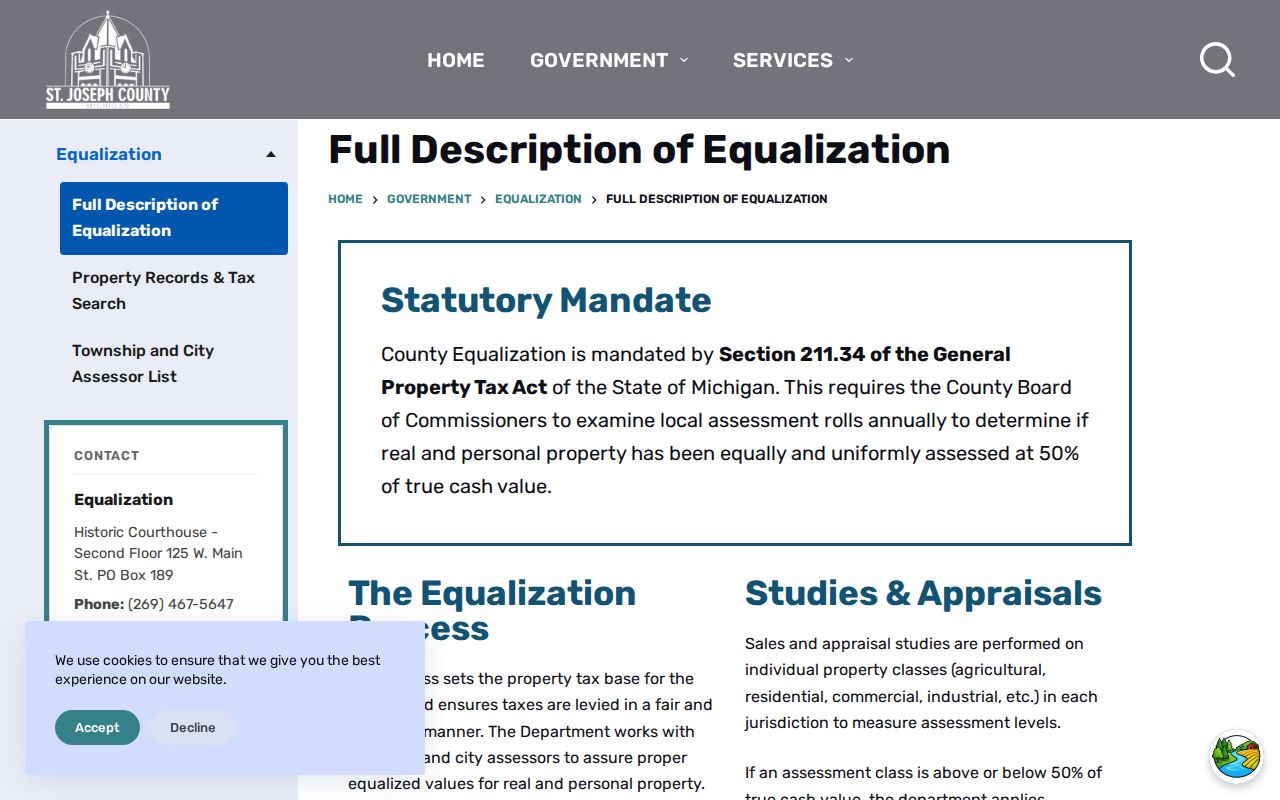
That split in duties explains why a countywide report and a single parcel card can answer entirely different questions about the same property in St. Joseph County.
FetchGIS Connects Tax History to Tax_ID
The county property and tax search opens the door to FetchGIS. It also reaches the delinquent-tax BSA system and local lookup options. Each parcel entry includes the Tax_ID, owner and parcel addresses, taxable value, and SEV. It also lists the PRE percentage, class, tax description, and last sale date.
The Tax_ID is the thread to follow. Use it across the GIS map. It works with the tax roll, a deed search, and any records request. Splits and combinations can generate a replacement number. So an older bill sometimes requires the prior identifier instead.
Look Up a St. Joseph County Tax Bill
Start by identifying the governmental unit on the bill. Then separate current taxes from delinquent ones. The county Treasurer takes delinquent payments and keeps those records, while current taxes stay with the local treasurer in each city or township.
- Search by address and copy the Tax_ID and governmental unit.
- Open the local-unit route for the current bill.
- Use the county delinquent-tax resources for overdue years.
- Compare value, class, and PRE with the same tax year.
- Assessed value
- A roll valuation distinct from taxable value.
- Mill or levy
- A rate applied to taxable value.
- PRE
- Michigan's Principal Residence Exemption.
- Tax lien
- A government claim tied to unpaid tax.
Current and Delinquent Taxes Use Separate Routes
The county Treasurer page walks through the handoff and the online payment route for delinquent accounts. It does not replace the local treasurer's current-year bill. The official delinquent-tax access screen appears on that page.
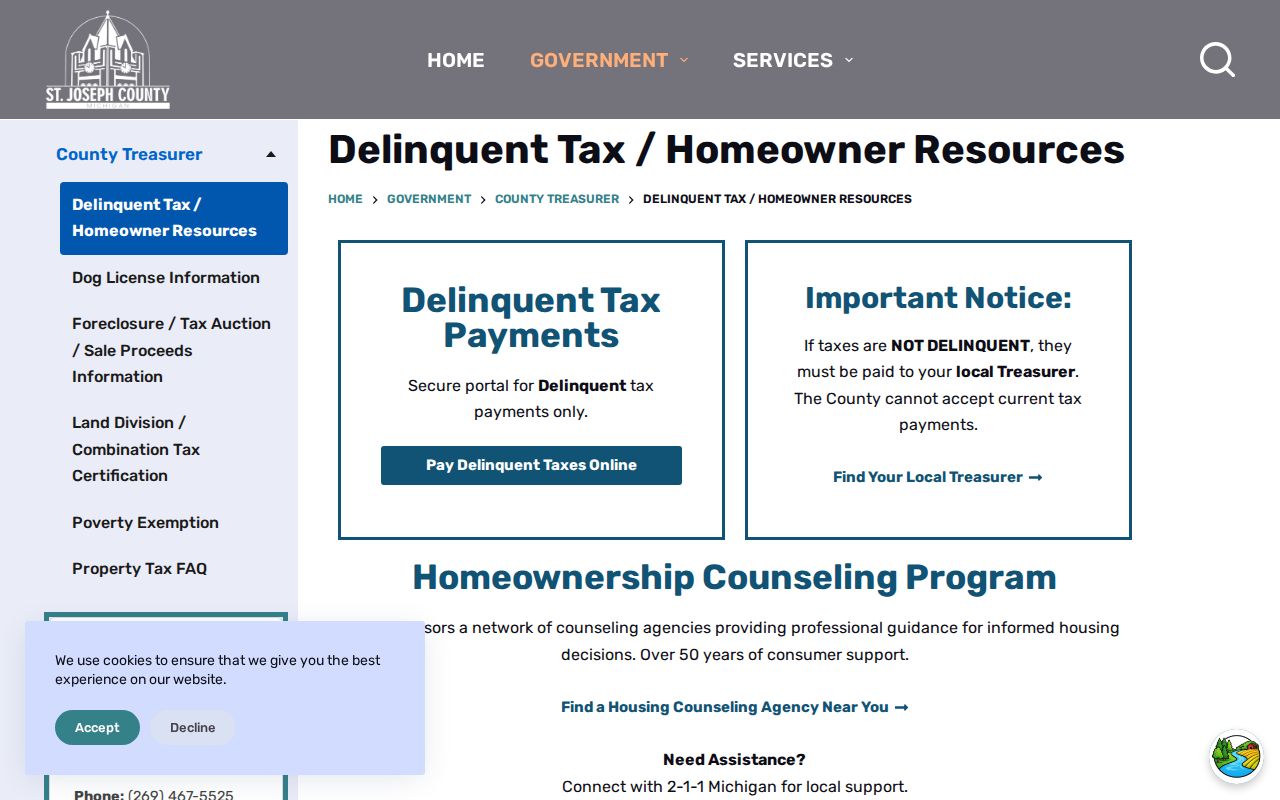
The screen helps distinguish a county-held overdue balance from current local collection.
PRE and Transfer Forms Change Taxable Context
Buying a home in St. Joseph County changes the paperwork. The buyer files Michigan Form 2766/L-4260 with the local assessor, generally within 45 days. A transfer usually uncaps taxable value the next year unless an exclusion applies. Splits and combinations create new parcel numbers. Those new parcels need a fresh PRE affidavit.
PRE Form 2368 has firm deadlines. File by June 1 for the summer tax bill or November 1 for the winter tax bill. Rescission is generally due within 90 days after the property stops being the principal residence.
Assessment Cards Supply the Parcel-Level Evidence
When the public result feels thin, ask the local assessor directly. Request the current assessment card and the relevant prior card. Ask for land and building characteristics, classification, and the PRE record. Include any final Board of Review decision. Give the parcel address, the Tax_ID, and the year. Keep your list of needs narrow.
A written county request can go through the JustFOIA portal for existing county records. Michigan FOIA calls for a response within five business days of legal receipt. A written extension of up to ten business days is allowed. The office has no duty to create a new appraisal or analysis on request.
Classification, PRE, and Taxable Status Are Distinct
Michigan's Board of Review petition keeps several things separate: assessed value, tentative taxable value, taxable or exempt status, classification, and qualified agricultural exemption. That structure works as a reading rule for St. Joseph County property tax records. A correct parcel class does not prove the value is right. A value dispute does not settle PRE status either.
Trust ownership can qualify through a grantor or beneficiary under the state's PRE guidance, with a separate affidavit for each parcel. False claims carry statutory penalties. So a name or mailing address on a parcel card should never be treated as proof of eligibility on its own.
Office, Mail, and Phone Access Remain Available
County Equalization sits on the second floor of the Historic Courthouse at 125 W. Main Street, Centreville. Joshua Simmons can be reached at (269) 467-5550, and the county publishes additional staff contacts. The County Treasurer works from the same courthouse at PO Box 220. Call (269) 467-5525 with delinquent-tax questions.
Send current bill questions to the local treasurer. Assessment corrections go to the local assessor the county lists. This handoff matters when an online link fails. It also helps when an older tax year is not displayed.
Sturgis and Three Rivers Show Different Value Trends
The 2024 report put residential equalized values up 22.14 percent in Three Rivers and 14.87 percent in Sturgis. Taxable values rose 11.47 and 9.26 percent respectively. The gap shows exactly why the two columns should never be merged. A classwide trend is not a parcel appraisal.
Check the parcel year, class, improvements, transfer status, and exemption record. Draw no conclusion about one property before that.
Note: Equalization reports describe tax administration and trends, not a guaranteed individual sale price.
The 2026 County Tax Auction Is Time-Sensitive
The Treasurer's page lists August 5, 2026, for the Title-Check LLC sale. Auction dates change, so recheck the official page. It also sets out the MCL 211.78t leftover-proceeds sequence.
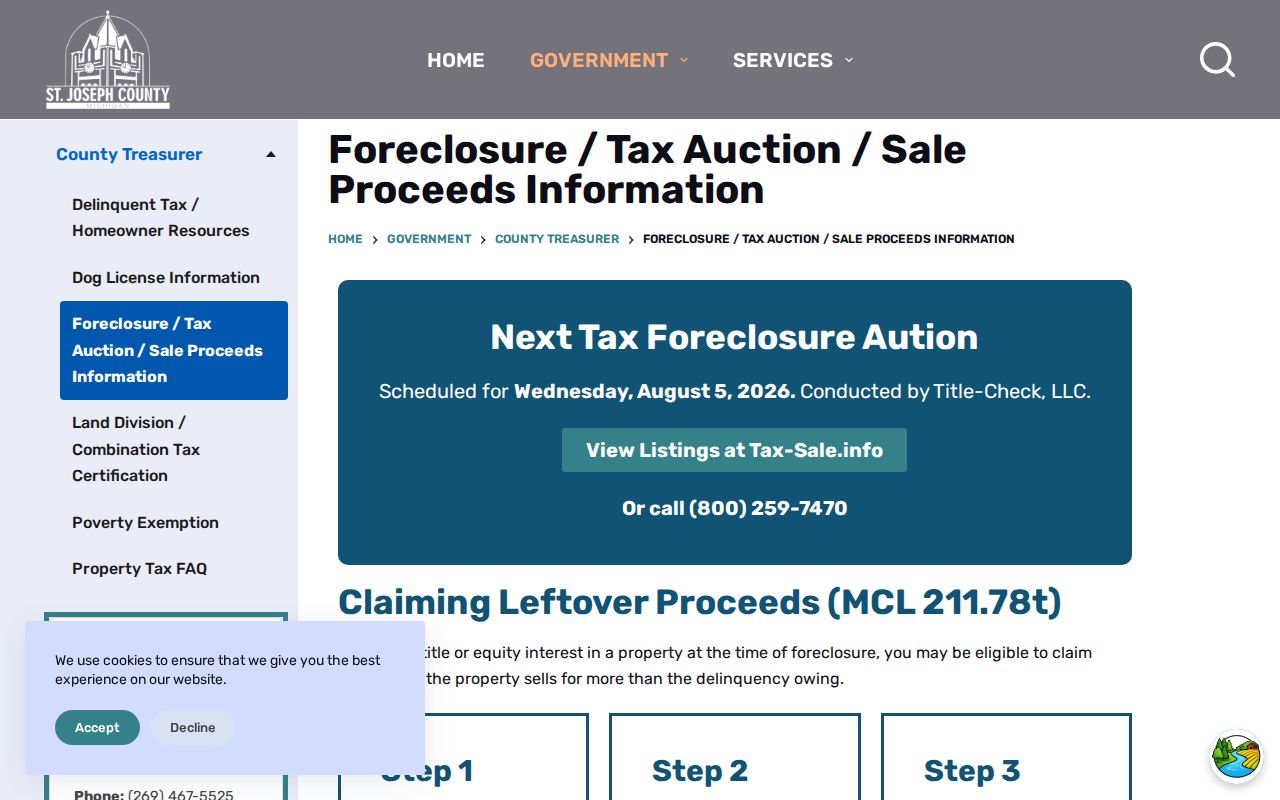
The image is a dated lead and should be verified against the live page.
Contest a St. Joseph County Assessment
Begin at the assessor's office. Check the parcel card for errors in class, building details, transfer status, and exemptions before anything else. Michigan's Form 618/L-4035 is the formal petition. It asks for the parcel code, the item being protested, the assessed value, and the owner's own estimate of true cash value. Deadlines and filing methods are set by the city or township where the parcel sits. So ask that office directly for its calendar.
Evidence has to fit the year and the issue under protest. A corrected building fact, a comparable sale, a dated photograph, a survey, or paperwork backing an exemption all carry weight. A simple complaint that the tax bill feels high does not. The petition preserves the Board's decision, its reasoning, and the vote. Michigan usually requires a Board protest before any Tax Tribunal appeal. Certain property classifications are excepted, though.
The state Board of Review form index is shown below.
The form covers the dispute itself, while the local unit sets the filing calendar.
Confirm the appeal window. St. Joseph County parcels go to their local Board of Review, so obtain the meeting date and filing method from that assessor.