
Identify a St. Joseph Property Owner
Start with the county's Property Records and Tax History Search. FetchGIS supplies the parcel context behind it. St. Joseph County records Tax_ID, Parcel Address, and Owner Name among its parcel fields. It also lists Owner Address, Last Sale Date, and Tax Description. Those details turn a simple address into a record. You can check that record against the deed index and the assessor's tax roll.
- Enter the exact parcel address, or use the Tax_ID when it is known.
- Save the owner name, mailing address, last-sale date, and tax description.
- Search that owner as grantee and match the latest deed to the same land.
- For a company, verify the exact name in Michigan's business registry.
FetchGIS is described as updated daily. Still, the county publishes no timeline from deed recording to owner-roll update. For a fresh transfer, confirm directly with the local assessor and the Register of Deeds.
St. Joseph Ownership Source Roles
Ownership shows up in several public systems because each office does a different job. Use the sources together. No single field gives the whole answer.
| Source | Owner Info It Gives | Access |
|---|---|---|
| FetchGIS and roll | Owner Name, Owner Address, Tax_ID, situs | Free county route |
| Register of Deeds | Recorded grantee, instrument, deed date | Tapestry or Laredo |
| Michigan business registry | Entity record and registered agent | Public state search |
| GIS parcel map | Land polygon and nearby parcel context | Free viewer |
The Register of Deeds search page offers Tapestry for occasional use and Laredo for subscribers. The office does not publish its first online index year. It can fill that gap directly. Note that Owner Address is only a mail route. It proves nothing about occupancy. The county's property-record gateway displays the official routes from a parcel to its owner data.
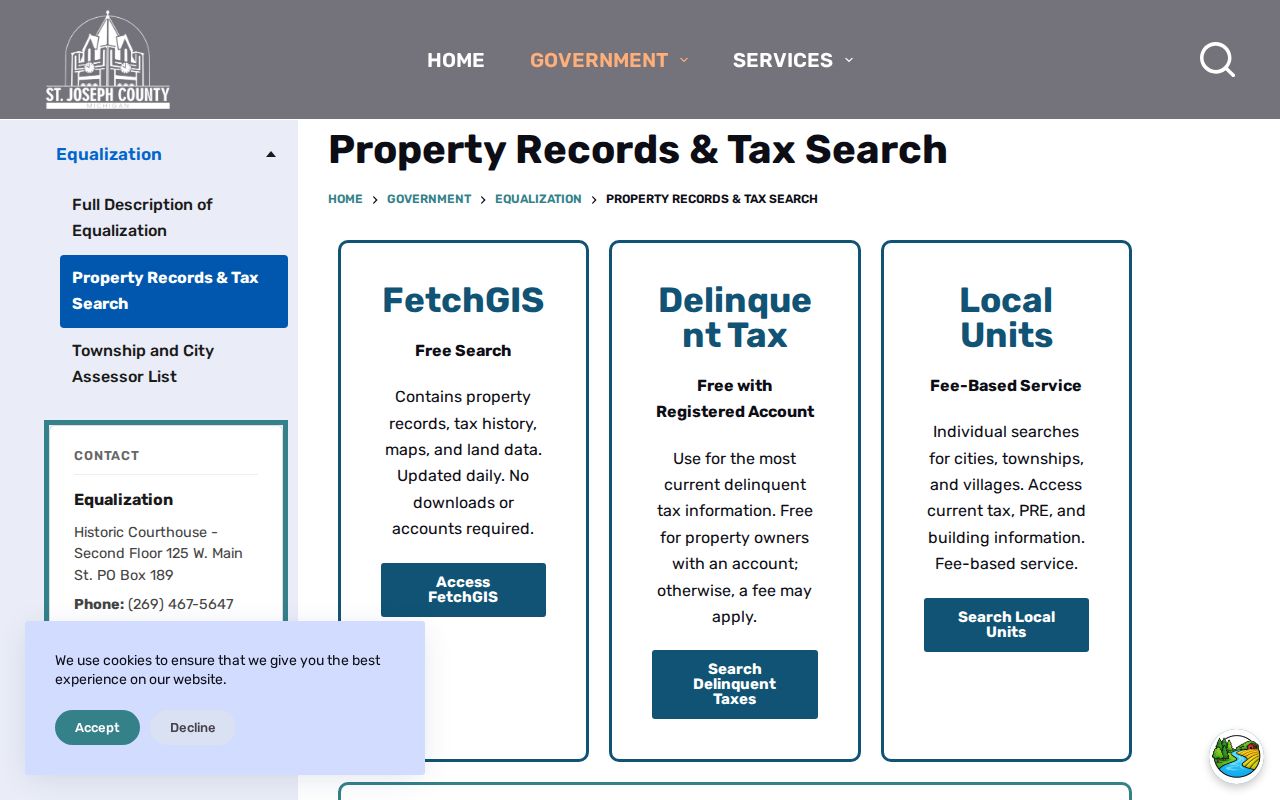
The method holds throughout: begin with the parcel source, then verify ownership in the deed record itself.
Read St. Joseph Owner Fields
Owner Name is the administrative name carried in county parcel data. Owner Address is just the mailing line. Parcel Address marks the situs, the place assigned to the land. A trust, company, attorney, or out-of-county address may receive the mail instead. Keep Tax_ID and Tax Description close at hand. That keeps the check tied to the same property.
- Owner of record
- The owner name shown in the current public roll.
- Grantee
- The person or entity receiving an interest under a deed.
- Title
- The legal ownership interest, which an index entry alone does not prove.
- Situs
- The parcel location, distinct from the owner's mailing address.
Parcel numbers can change after a split or combination. The county's 2023 GIS summary reported more than 100 combinations, splits, or boundary changes plus 175 new or reissued addresses. When an older record will not line up, compare the acreage and legal description.
Confirm Who Owns St. Joseph Land
Search the roll name as a grantee in the deed index. Open the newest likely deed. Compare the legal description, recording date, and instrument number or liber/page against the parcel record. Check the transfer language too. Read the image itself, not just the index result. An index may omit reservations, survivorship terms, or other language that affects the interest conveyed.
Even the deed image is not a title opinion. It may miss a lien, easement, probate event, or later filing. The Register of Deeds records instruments but gives no legal advice. For a purchase or a disputed interest, get professional title work.
Business Owners in St. Joseph County
For an LLC or corporation, copy the exact recorded spelling and use Michigan's Corporations Division. The MiBusiness Registry Portal went live June 23, 2025. Its public functions cover searching records, requesting certificates or copies, and making filings.
Treat a registered agent as a contact clue only. The agent does not necessarily own the parcel. An assumed-name certificate filed with the County Clerk may link a DBA to an operating name, yet it establishes nothing about beneficial control. Trust names deserve the same restraint. Always compare the full name to the deed.
Estate Ownership Needs Two Records
A current roll may still show a decedent. A new deed may name a personal representative instead. Trace the probate trail through the decedent, the representative, the real-property description, the sale order, and the final distribution, then locate the deed or affidavit recorded afterward.
The county genealogy page reports death records from 1867 and public records into the 1830s. A death record, obituary, or family tree is a lead, not a transfer. Never infer an heir from a surname.
Protect St. Joseph Property Owners
The Register of Deeds links a free Property Fraud Alert. It sends notice whenever a document is recorded in an enrolled name. It watches future recordings only. It does not suppress owner data, stop an instrument, or prove title.
Michigan's Address Confidentiality Program gives eligible survivors a substitute address. It also provides mail forwarding through an advocate. Never combine parcel, voter, and business sources to defeat that protection. Public records support lawful land research, not harassment.
What a St. Joseph Owner Check Omits
Any answer about who owns a property must stay tied to a date. It must also stay tied to a source. Owner fields can lag. A mailing address does not prove residence. A company filing does not reveal every person with an economic interest. A map cannot settle a legal line, and an index entry is not the deed.
Not a title search. A St. Joseph County property owner name is a strong lead, not legal proof of complete title. Never use it to harass or target anyone.
Deed-fraud prevention and estate work benefit from a careful owner-of-record review. Easement questions, boundary disputes, and purchase checks do too. For current tax roll timing and deed confirmation, see the current owner record.
Disagreements between official sources happen. The type of mismatch tells you which custodian to ask next. A different owner name on one record points to the newest recorded deed. That mismatch means a question for the local assessor. The parcel number itself can change. Then pull the former Tax_ID and the legal description. Also pull the plat and any split or combination history. Copy a business name exactly into Michigan's current entity registry. A trust or estate name, though, should be read straight from the deed. Do not shorten it. Working source by source this way can identify who owns St. Joseph County land. It never treats a tax mailing field as proof of where any person lives.